

ART

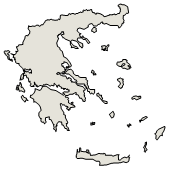
GreeceGreece

Administrative Region : West Greece
Regional unit : Achaia

Souvardo (Σούβαρδο) Achaia

Souvardo is a village in the former Kalavryta District of the Achaia Prefecture. Today it is a settlement of the Local Community of Kalavryta of the "Kallikratiko" Municipality of Kalavryta. It is located at an altitude of 1,155 meters, on Mount Helmos and is approximately 8 kilometers from Kalavryta. In the 2011 census, it had 38 residents[1].
Name [2]

There are many versions of the name Souvardo, it is believed to be of Byzantine origin from "Esso Varda" = "Souvarda" = "Souvardo". Esso Varda means estates near the village. Another version is that it comes from the name of the first settler named Vardas, which from a corruption of "sto Varda" became "Souvarda" = "Souvardo". The name Vardas is preserved in the neighboring Vrachni in a chrysobull of 1348[3]. Other versions have it of Arvanite or Slavic origin and another of Turkish origin.

History

The area where Souvardo is located, like neighboring Vrachni, is believed to have belonged to the Monastery of Megalos Spilaios or to a landowner in the 5th century AD[2]. The first inhabitants of the area were workers or shepherds on these estates and lived there in makeshift huts[4]. Later, a small settlement of Slavs[5]. Until the 10th century, according to the historian G. Papandreou in his book "Azania", shepherds from Epirus, driven by raids by Illyrian tribes, settled in Souvardo, as in Vrachni.[6] Genealogical trees of many families have been preserved, such as the Renesi family, which has survived until 1650[5] and the Papanikolopoulos family until 1685[7]. The view that the village was settled in the 10th century is reinforced by the discovery by archaeologists of architectural members of this era at the site of "Palaio-Souvardo"[8].

Vrachni is mentioned in a Byzantine chrysoboul of 1348, where an area of ​​it was granted to Mega Spilaio and the names of the cultivators are mentioned, among them some from Souvardo[9]. During the first Turkish occupation, no Ottomans settled in Souvardo, because the area was covered by the special privilege of the Monastery of Mega Spilaio, which maintained administrative autonomy[10]. Souvardo is mentioned in the Venetian census of Grimani of 1700 with 159 inhabitants[10].

In 1821 and during the Revolution, Karachalios from Souvardo was the one who notified the archpriests of the Ottomans' intentions and not to go to Tripolitsa[11]. In May 1826, the village was burned by Ibrahim while its inhabitants had taken refuge in the Great Cave where they were besieged by the Ottoman army[12]. In the Monastery it is reported that there were 5,500 inhabitants of Vrachni and Souvardo mainly, after a fierce battle over 200 Souvardo residents were killed while many were captured[13]. In June 1826, Ibrahim burned the village for the second time.


The following are mentioned as fighters from Souvardo in 1821[13]: Philotheos Giannakopoulos, Germanos Papatheodorou, Georgios Anagnostopoulos, Giannis Tzakos, Kallistratos Papageorgiou, Panagiotis Karachalios, Argyris Papageorgiou and others.

In the Maison census of 1830, it had 321 residents. After the Revolution, Souvardo residents began to descend to the lowlands to work in the raisins, mainly in the area of ​​the village of Tsoukala. From 1830, permanent settlement and movement of residents depending on the season to summer or winter residences are reported[14]. Families from Souvardo also settled in the villages of Lappa and Kourtesi. Tsoukalaika and Kourtesi were initially called "Souvardaiika" and "Souvarditika" respectively. Gradually, the inhabitants of Souvardos settled permanently in the lowlands of today's Tsoukalaika mainly and the village in the 1889 census is mentioned with 3 residents[15]. Georgios Papandreou in his book "Epetiris Kalavryton" in 1906 mentions 177 residents, 100 families and 180 voters[16].

On 9 December 1943, the German army burned the village and executed many residents, it is reported that only 2 houses and the church were saved from the fire[17]. Most of the houses in the village were rebuilt after 1949 and the end of the civil war[18].

Souvardo was a resident of the former Municipality of Kalavryta (1871-1875) and the Mayor of Kalavryta (1871-1875) was Sotiris Papanikolopoulos.

Administrative development

From 1833 to 1912 it was a settlement of the then Municipality of Kalavryta[19]. When the Municipality of Kalavryta was abolished in 1912, it became a settlement of the Community of Kalavryta. From 1944, when the Municipality of Kalavryta was reconstituted, until 1997, Souvardo did not cease to be a part of it. It then became a settlement of the Municipal District of Kalavryta, of the new Municipality of Kalavryta based on the "Kapodistrias Plan"[20]. Since 2011, it has been a settlement of the Local Community of Kalavryta of the "Kallikratiko" Municipality of Kalavryta.
Other information

Since 2018, a cultural and landscaping association of its residents has been active in the village under the name "Prophet Elias", the objectives of which include, among others, "the development of ties, the dissemination of the spirit of volunteerism, solidarity and the cultivation of relations between its members and all the residents of Souvardos"[21].
References

EL.STAT. - Resident population of Greece. Census 2011
Papanikolopoulos 2010, p. 31
Papanikolopoulos 2010, p. 44
Papanikolopoulos 2010, p. 32.
Papanikolopoulos 2010, p. 38.
Papanikolopoulos 2010, p. 37.
Papanikolopoulos 2010, p. 139.
Papanikolopoulos 2010, p. 41.
Papanikolopoulos 2010, p. 46.
Papanikolopoulos 2010, p. 54.
Papanikolopoulos 2010, p. 66.
Papanikolopoulos 2010, p. 70.
Papanikolopoulos 2010, p. 71.
Papanikolopoulos 2010, p. 77.
Papanikolopoulos 2010, p. 78.
Papanikolopoulos 2010, p. 79.
Papanikolopoulos 2010, p. 86.
Papanikolopoulos 2010, p. 88.
Papanikolopoulos 2010, p. 175.
Hellenic Society for Local Development and Self-Government Municipality of Kalavryta administrative changes

“Summary of the provision for the recognition of a statutory association”, Imerissios tis Achaias, no. f. 4614 (Monday, 16 July 2018), p. 20.

Sources

Results of the Population-Housing Census 2011 concerning the Permanent Population of the Country, Government Gazette of the Hellenic Republic, vol. 2, f. 3465 (28 December 2012).
Kostas Papagiannopoulos (ed.), Vrachnaeika and Monodendri. Landscape archaeology and local history, foreword: Vasilis Togantzis, Miltiadis Goutas, Lazaros Kolonas, Published by the Municipality of Vrachnaikos-Municipal Enterprise for Cultural Development of Vrachnaikos, Patras 2009. ISBN 978-960-99129-0-7.
Andreas Chroni Papanikolopoulos, Souvardo, D. & P. ​​Nikolopoulos Publications, Patras 2010. ISBN 978-960-99488-0-7.

Bibliography
Louloudis, Theodoros H. (2010). Achaia. Settlements, settlers, self-government. Patras: Prefectural Enterprise for Cultural Development of South-Eastern Achaia.

Municipal unit Kalavryta
Community Ano Vlasia
Ano Vlasia (Άνω Βλασία, η)
Community Ano Lousoi
Ano Lousoi (Άνω Λουσοί, οι)
Valvousa (Βαλβούσια, τα) [6]
Community Valta
Valta (Βάλτα, η)
Community Vilivina
Vilivina (Βιλιβίνα, η)
Community Goumenissa
Goumenissa (Γουμένισσα, η)
Community Doumena
Doumena (Δουμενά, τα)
Community Drosato
Drosato (Δροσάτο, το)
Community Kalavryta
Avlonas (Αυλών, ο)
Vrachni (Βραχνίο, το)
Kalavryta (Καλάβρυτα, τα)
Krastikoi (Κραστικοί, οι)
Moni Agias Lavras (Μονή Αγίας Λαύρας, η)
Souvardo (Σούβαρδο, το)
Stasi Kerpinis (Στάση Κερπινής, η) [7]
Community Kallifonio
Kallifonio (Καλλιφώνιο, το)
Community Kandalos
Kandalos (Κάνδαλος, ο)
Community Kato Vlasia
Kato Vlasia (Κάτω Βλασία, η)
Menychtaiika (Μενυχταίικα, τα)
Metochi (Μετόχι, το)
Moni Agiou Nikolaou Vlaias (Μονή Αγίου Νικολάου Βλασίας, η)
Community Kato Zachlorou
Ano Zachlorou (Άνω Ζαχλωρού, η)
Kato Zachlorou (Κάτω Ζαχλωρού, η)
Moni Megalou Soilaiou (Μονή Μεγάλου Σπηλαίου, η)
Community Kato Lousoi
Kato Lousoi (Κάτω Λουσοί, οι)
Lousiko (Λουσικό, το)
Community Kerpini
Kerpini (Κερπινή, η)
Community Kertezi
Kertezi (Κέρτεζη, η)
Community Korfes
Korfes (Κορφές, οι)
Community Kouteli
Kouteli (Κούτελη, η)
Palaia Kouteli (Παλαιά Κούτελη, η) [8]
Community Kryoneri
Kryoneri (Κρυονέρι, το)
Community Lagovouni
Lagovouni (Λαγοβούνι, το)
Community Lapanagoi
Lapanagoi (Λαπαναγοί, οι)
Community Manesi Kalavryton
Manesi (Μανέσι, το)
Bouboukas (Μπούμπουκας, ο)
Community Mikros Pontias
Karousi (Καρούσι, το)
Lompokas (Λομποκάς, ο)
Megas Pontias (Μέγας Ποντιάς, ο)
Mikros Pontias (Μικρός Ποντιάς, ο)
Community Petsakoi
Bosi (Μπόσι, το)
Petsakoi (Πετσάκοι, οι)
Community Plataniotissa
Digela (Δίγελα, η)
Plataniotissa (Πλατανιώτισσα, η)
Spartinou (Σπαρτινού, η)
Community Priolithos
Priolithos (Πριόλιθος, ο)
Community Profitis Ilias
Mouriki (Μουρίκι, το)
Profitis Ilias (Προφήτης Ηλίας, ο)
Community Rogoi
Rogoi (Ρογοί, οι)
Community Sigouni
Lefki (Λεύκη, η)
Sigouni (Σιγούνι, το)
Community Skepasto
Skepasto (Σκεπαστό, το)
Community Trechlo
Lapatheia (Λαπάθεια, η)
Trechlo (Τρεχλό, το)
Community Flampoura
Neochori (Νεοχώρι, το)
Ortholithi (Ορθολίθι, το)
Flampoura (Φλάμπουρα, τα)

Greece :

A - B - C - D - E - F - G - H - I - J - K - L - M -
N - O - P - Q - R - S - T - U - V - W - X - Y - Z

Retrieved from "http://en.wikipedia.org/"
All text is available under the terms of the GNU Free Documentation License

Ancient Greece

Science, Technology , Medicine , Warfare, , Biographies , Life , Cities/Places/Maps , Arts , Literature , Philosophy ,Olympics, Mythology , History , Images

Medieval Greece / Byzantine Empire

Science, Technology, Arts, , Warfare , Literature, Biographies, Icons, History

Modern Greece

Cities, Islands, Regions, Fauna/Flora ,Biographies , History , Warfare, Science/Technology, Literature, Music , Arts , Film/Actors , Sport , Fashion

---

Cyprus

Greek-Library - Scientific Library

Greece

World

Index

Hellenica World
