

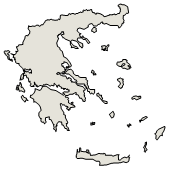

Administrative Region : West Greece
Regional unit : Achaia
Krastikoi (Κραστικοί) Achaia
The village of Krastikoi is a settlement and belongs to the Municipality of Kalavryta. It is ten (10) kilometers from Kalavryta and is the first village we come across on the Kalavryta - Klitoria provincial road, to the left of the intersection to Kertezi.
General information - Location
There is "Kato Krastikoi", which is located on the public road and consists of 3-4 houses and huts, and the village of "Krastikoi" at a distance of about two (2) kilometers from the public road. It is a small hamlet consisting of about thirty (30) houses and fifty (54)[1] permanent residents, of which fifteen (15) children, who go to the Primary, Middle and High School of Kalavryta. Compared to the other villages, it has maintained its population, since in addition to the elderly, many of whom are approaching a hundred, there are also families with young people who remained in the village, engaged in agriculture and livestock farming.
It is located at an altitude of approximately 900 meters, built at the foot of the mountain "Kotroni". Around it are the mountains and locations "Kageli" towards the side of Agia Lavra to the north, "Kostalonis" "Pentevrisses", "Kiouklos", "Mertolazos" "Aitorachi" to the east, "Krya Vrisi", "Psilogaidara" to the south and "Trano Vouno", "Kleivatsoura", "Metochi", to the west. Two streams divide the village into two neighborhoods and there is the "Asprakrania" ravine with permanent water, as well as the "Cold Vrisi" springs with very cold water, "Agia Paraskevi" "Antelikos", "Nikolinas Vrisi", "Taxiarchis", "Pigadakia" and "Koutsoura".
Historical information
From oral tradition we know that the village before being definitively built in its current location had been built in two other locations, one in Kampasi at the location "Agios Dimitrios" and the other at the location "Metochi". It was inhabited by shepherds who built their huts, had their families and their animals and who, seeking refuge from the various raids by the conquerors from time to time, eventually ended up in the current location, where there was an abundance of water and the natural environment protected them, there were a lot of trees and the village was not visible from the road and they themselves had very good visibility.
The village belonged to the Municipality of Kalavryta which was formed with the N.D. of 8 April 1835, was classified in the 2nd class, with a population of 2,492 inhabitants and the seat was Kalavryta. It is referred to as Kastrikoi or Krastikoi and together with Kalavryta, Vrachni, Souvardo, Vysoka and the Monastery of Agia Lavra they formed the initially established Municipality of Kalavryta[2].
Krastikoi never had a community of their own and were always a settlement of the Municipality of Kalavryta. Attempts made after the Occupation to create a Community failed because there was a division of the residents. Also in the 1970s, it was proposed by the late Mayor of Kalavryta Panagiotis Polkas that the village be transferred to Kalavryta, specifically, if the residents wanted it, they would be given plots of land on the road to Agia Lavra to build houses and move in, but this project also failed, because again most people did not want to move away from the village. The village is 1800 meters from the public road and it never had any public transport, the residents went down on foot or with animals to the "shed" where they took the bus to Kalavryta. Today, those who do not have cars are served by taxis from Kalavryta.
Monastery of the All-Great Archangels
Above the village, to the east, there was the Monastery of the All-Great Archangels Michael and Gabriel, which we do not know when it was built, it is simply assumed that it was built when the Byzantine Despotate flourished in the Peloponnese, since it is said that the monastery was visited by the last Byzantine Emperor Constantine Palaiologos during the period when he was Despot of Kalavryta. The historical archives of the Holy Monastery of Agia Lavra that are preserved in the Monastery do not mention anything related. It was built in limestone and until the 1970s the Catholicon of the Monastery was preserved, with its outline and frescoes, which today have been covered with soil from the landslide of the limestone. Only the so-called "Gerodimou's cell" is preserved, which is carved into limestone and can be visited. Tradition says that the Monastery at the time of its flourishing numbered over a hundred monks, among them many ascetics living in hermitages (hermitages), since the natural environment (limestones) favored the creation of hermitages in the earth. The Monastery dominated the entire village since it had many estates and mainly vineyards (hence the location Paliamela) and produced large quantities of wine.
The name of the village also came from wine. It is said that the Monastery was betrayed by a local man to the Turks and they burned it down and that the wine that spilled from its warehouses reached the public road and from there it took the name “Krasikoi” and for the sake of euphony the letter taff was added and finally it was called “Krastikoi”.
After this destruction the Monastery was abandoned. The church, the bells and all the belongings of the Monastery are presumed to be buried there.
In memory of this Monastery, the Holy Monastery of Agia Lavra and the residents of the village have built and renovated today the chapel at the location “Metochi” dedicated to the memory of the All-Great Archangels which operates every Tuesday of Easter and on the feast of the Holy Archangels on November 8, when the weather permits.
During the Venetian occupation
During the Venetian occupation, it belonged to the Territory of Kalavryta. The village is mentioned in the Venetian Grimani record in 1700 as "Crasticus" and was found to be inhabited by 13 families, i.e. it had 46 inhabitants[3].
During the Turkish occupation
The village was inhabited by Turks during the Turkish occupation and it is even said that the Agas lived in the old house of Stavropoulos, which was very beautiful. Further up at the location "Akranes" was at that time the village fountain, a spring that produced plenty of water. According to tradition, a Turkopoulos, the son of Agas, fell into this spring and drowned. Out of great sorrow for the loss of his child, he ordered a cauldron and eighty "pokaria" (sheep's hair) to be thrown into the spring to close it, and from then on the water gushed out and came out of today's "great fountain". Fighters who participated in the 1821 revolution and were descended from the Krastics were Aletras Dimitrios, Aletras Theodoros, Aletras Konstantis, Theodoropoulos Andreas, Kostopoulos Dimitrios and Roumeliotis Giannis[4].
German Occupation
During the German Occupation, both Italians and Germans passed through the village, but they limited themselves only to looting and did not burn it. Aris Velouchiotis also passed through the village, stood in the square and spoke to the people and at that time everyone was excited and many participated in the EAM. In general, the Civil War did not touch the village that much, there were of course cases of confrontation and betrayal, but most residents did not participate. When the Germans killed the people of Kalavryta on 13-12-1943, there were two victims from Krastikoi. Also in Patras, in Agios Georgios Square, the Germans hanged Giannakis Sotiropoulos, father of seven children.
Demographic data
The demographic evolution of the village according to the national censuses is as follows[5]:
year inhabitants
1830 13 households
1835 17 households / 89 inhabitants
1844 108 inhabitants
1848-1851 26 households / 117 inhabitants
1861 108 inhabitants
1879 102
1889 94
1896 126
1907 127
1920 146
1928 166
1940 183
1951 161
1961 140
1971 112
1981 108
1991 63
2001[6] 73
2011[1] 54
Churches
The central church of the village is dedicated to "Saint Demetrius the Myrrh-Breather", dates back to before 1844 and is celebrated with great splendor on October 26 with an event organized by the Beautification and Cultural Association of the village. The village also celebrates (in the past there was a festival with kouloures and dancing that lasted three days) on May 9 of Saint Nicholas the Younger in the Mountains, who is also the second saint (temple) honored and it is said that the Saint himself passed through the village on foot and at the location of "Ai Nikolas", in memory of this event, a very old stone iconostasis is built. There are also the chapels of Saint Nicholas of the Sea and Saint George (where the cemetery is also). And locations where there used to be small churches and were apparently destroyed are "Agia Paraskevi" located southeast of the village in the homonymous location, "i Panagia" and "Ai Giannis" located west of the village.
Link with the Holy Monastery of Ag. Lavra
The villagers had a great connection with the Monastery of Agia Lavra, since it was only about an hour away on foot and they visited it very often, they worked on the construction of the Monument to the Hero of the Revolution, on fountains that were built at that time and on roads. In the church of Agios Dimitrios, priests - monks from Agia Lavra officiated for many years and many young children from the village, especially during the years of the Occupation, had gone to be submissive to elders, who sent them to school and learned letters. In the village, the monks brought the cart of Agios Alexios for pilgrimage to the church. There is a tradition that once when a locust had fallen on the crops, a procession was held and all the locusts fell into the river and were lost.
The village today and in the past
The Cultural Association has upgraded the village with the events it holds every year, New Year's pie cutting, Summer gathering and the events on the feasts of Saints Demetrius and Nicholas the Younger. Today, the appearance of the village has changed since many new houses have been built, the old ones have been renovated, the squares and roads have been built. There were two fountains in the village, the "small one" where the women washed their clothes and the "big one" where they collected water for their homes. Today, only the "big fountain" with the plane tree is preserved. The village is filled with people in the summer and during the big holidays of Christmas and Easter, since most villagers come to spend their holidays and see their relatives. Today in the village there are two cafes, one in the plane tree and the other at the entrance of the village, where one can enjoy their coffee and food after ordering.
References
EL.STAT. - Resident Population of Greece. Census 2011
see. B.D. 8/4/1835
Louloudis 2010, p. 513
see. Nikolaos Filippakopoulos, Kalavryta at Megalo 21, Athens 1972, p. 272
See. aggregates up to 2001 in Loulouudis 2010, p. 513
E.S.Y.E. - Resident Population of Greece. Census 2001
Sources
Results of the Population-Housing Census 2011 concerning the Resident Population of the Country, Government Gazette of the Hellenic Republic, vol. 2, p. 3465 (December 28, 2012).
N.S.Y.E. - Resident Population of Greece. Census 2001, Athens 2004. ISBN 960-86704-8-9.
Nikolaos Filippakopoulos, Kalavryta in Megalo 21, Athens 1972.
Bibliography
Louloudis, Theodoros H. (2010). Achaia. Settlements, settlers, self-government. Patras: Prefectural Cultural Development Enterprise of South-Eastern Achaia.
| Municipal unit Kalavryta |
|---|
| Community Ano Vlasia |
| Ano Vlasia (Άνω Βλασία, η) |
| Community Ano Lousoi |
| Ano Lousoi (Άνω Λουσοί, οι) |
| Valvousa (Βαλβούσια, τα) [6] |
| Community Valta |
| Valta (Βάλτα, η) |
| Community Vilivina |
| Vilivina (Βιλιβίνα, η) |
| Community Goumenissa |
| Goumenissa (Γουμένισσα, η) |
| Community Doumena |
| Doumena (Δουμενά, τα) |
| Community Drosato |
| Drosato (Δροσάτο, το) |
| Community Kalavryta |
| Avlonas (Αυλών, ο) |
| Vrachni (Βραχνίο, το) |
| Kalavryta (Καλάβρυτα, τα) |
| Krastikoi (Κραστικοί, οι) |
| Moni Agias Lavras (Μονή Αγίας Λαύρας, η) |
| Souvardo (Σούβαρδο, το) |
| Stasi Kerpinis (Στάση Κερπινής, η) [7] |
| Community Kallifonio |
| Kallifonio (Καλλιφώνιο, το) |
| Community Kandalos |
| Kandalos (Κάνδαλος, ο) |
| Community Kato Vlasia |
| Kato Vlasia (Κάτω Βλασία, η) |
| Menychtaiika (Μενυχταίικα, τα) |
| Metochi (Μετόχι, το) |
| Moni Agiou Nikolaou Vlaias (Μονή Αγίου Νικολάου Βλασίας, η) |
| Community Kato Zachlorou |
| Ano Zachlorou (Άνω Ζαχλωρού, η) |
| Kato Zachlorou (Κάτω Ζαχλωρού, η) |
| Moni Megalou Soilaiou (Μονή Μεγάλου Σπηλαίου, η) |
| Community Kato Lousoi |
| Kato Lousoi (Κάτω Λουσοί, οι) |
| Lousiko (Λουσικό, το) |
| Community Kerpini |
| Kerpini (Κερπινή, η) |
| Community Kertezi |
| Kertezi (Κέρτεζη, η) |
| Community Korfes |
| Korfes (Κορφές, οι) |
| Community Kouteli |
| Kouteli (Κούτελη, η) |
| Palaia Kouteli (Παλαιά Κούτελη, η) [8] |
| Community Kryoneri |
| Kryoneri (Κρυονέρι, το) |
| Community Lagovouni |
| Lagovouni (Λαγοβούνι, το) |
| Community Lapanagoi |
| Lapanagoi (Λαπαναγοί, οι) |
| Community Manesi Kalavryton |
| Manesi (Μανέσι, το) |
| Bouboukas (Μπούμπουκας, ο) |
| Community Mikros Pontias |
| Karousi (Καρούσι, το) |
| Lompokas (Λομποκάς, ο) |
| Megas Pontias (Μέγας Ποντιάς, ο) |
| Mikros Pontias (Μικρός Ποντιάς, ο) |
| Community Petsakoi |
| Bosi (Μπόσι, το) |
| Petsakoi (Πετσάκοι, οι) |
| Community Plataniotissa |
| Digela (Δίγελα, η) |
| Plataniotissa (Πλατανιώτισσα, η) |
| Spartinou (Σπαρτινού, η) |
| Community Priolithos |
| Priolithos (Πριόλιθος, ο) |
| Community Profitis Ilias |
| Mouriki (Μουρίκι, το) |
| Profitis Ilias (Προφήτης Ηλίας, ο) |
| Community Rogoi |
| Rogoi (Ρογοί, οι) |
| Community Sigouni |
| Lefki (Λεύκη, η) |
| Sigouni (Σιγούνι, το) |
| Community Skepasto |
| Skepasto (Σκεπαστό, το) |
| Community Trechlo |
| Lapatheia (Λαπάθεια, η) |
| Trechlo (Τρεχλό, το) |
| Community Flampoura |
| Neochori (Νεοχώρι, το) |
| Ortholithi (Ορθολίθι, το) |
| Flampoura (Φλάμπουρα, τα) |
Greece :
A - B - C - D - E - F - G - H - I - J - K - L - M -
N - O - P - Q - R - S - T - U - V - W - X - Y - Z
Retrieved from "http://en.wikipedia.org/"
All text is available under the terms of the GNU Free Documentation License
| Ancient Greece
Science, Technology , Medicine , Warfare, , Biographies , Life , Cities/Places/Maps , Arts , Literature , Philosophy ,Olympics, Mythology , History , Images Medieval Greece / Byzantine Empire Science, Technology, Arts, , Warfare , Literature, Biographies, Icons, History Modern Greece Cities, Islands, Regions, Fauna/Flora ,Biographies , History , Warfare, Science/Technology, Literature, Music , Arts , Film/Actors , Sport , Fashion --- |

