

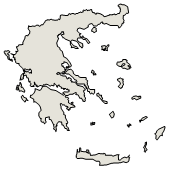

Administrative Region : West Macedonia
Regional unit : Florina
Pisoderi (Πισοδέρι ) Florina
Pisoderi is a village built on the slopes of Mount Varnountas at an altitude of approximately 1,420 meters and is the most mountainous settlement in the Florina Prefecture and belongs to the Municipality of Prespa. The settlement of Vigla also belongs to the Pisoderi community, well known for the very low temperatures that prevail there in winter[1] but also for the Ski Center that operates there.
Toponym
The name Pisoderi is Ancient Macedonian and comes from the composition of the words [a] pisos = meadow, passable location or pisson = mountain, mountain and [b] derē, derē, derīs = exaggeration of mountains, neck [2] Another theory claims that it came from the Medieval Latin word passatorium = narrow passage, neck passage. Both versions fully correspond to the topography of the entire area around the settlement, but also to the fact that it is a place name that was established before the descent of the Avars in 580 AD in the Balkan Peninsula.[3]
Demography
It is first mentioned in an Ottoman "notebook" of 1481 under the name Ipsoder and with a population of 12 families.[4] In 1876, there were 200 families living there, which decreased in 1905 to (170), in 1971 to (48), in 1981 to (30) and according to the 2011 Census, its population amounts to only (7) permanent residents.[5] Its inhabitants are Vlach-speaking descendants of Latinized Macedonian-Dorians,[6] kleisourofilakes from the time of the Ancient Macedonians who continued both during Byzantine and Turkish rule and had the same privileges as the Dervenohorites of the Isthmus of Corinth.[7] In 1748, the valis of Roumeli [the whole of present-day Greece] Yaga Pasha directly assigned the Christians to guard order and the dervenia.[8] Thus, the Pisoderites became dervdentzides [armed guards of narrow streets] but also khantzides [innkeepers] and tzelepides [tax tenants].[9] They never engaged in agriculture or animal husbandry. After the destruction of Nikolitsa by the Albanians in 1700, the Pisoderi people took over the grocery trade of over two hundred settlements in the regions of Florina, Prespa, Korestia and Devoleas (now part of Albania). The population of Pisoderi began to decline when their trading colonies began to form, in neighboring Florina, in Argos Orestiko, in Kastoria, in the Serbian cities of Niš, Pazarevac, Resna and Monastir, as well as in the European cities of Kharkiv (Ukraine), Chisinau (Bessarabia), Budapest, Bucharest, Targovishte (Romania) and Plevna (Bulgaria), but also outside Europe, in Egypt and the USA.[10] Until 1876, the land extending from the village of Alona in Florina to the village of Antartiko in Florina belonged to the valide Sultana. When her treasury decided to sell the land, the residents of Pisoderi asked to buy the land on which their village was built and the surrounding forests. After adventures [11] in August 1876, the Albanian [Catholic] Eduardos Tzivanakis sold an area of approximately 17,000 acres to the eight representatives of the residents of Pisoderi. [12] The forest area was converted in 1924 into the Pisoderi Forest Co-Ownership Management Cooperative with an initial [363] cooperative shares and continues to operate until today 2021. [13]
History
Pisoderi was built at the beginning of the approximately 70 km long narrow pass, which separates the Varnountas mountain range from the Vitsi mountain range but also connects the Lyngistikos [in antiquity] and today the plain of Florina with the regions of Prespa, Kastoria, Devoli [today Albania]. The Vigla Pisoderi pass with an altitude of 1,553 m. is one of the first-used passes of the Balkan Peninsula and the settlement of Pisoderi is one of the highest permanently inhabited settlements in the Balkans with an altitude of 1,420 m.[14]
In 337 BC Alexander, returning from the king of Illyria Glafkia, took the most direct and least arduous route, namely the passage of Lygos.[15]
Arrian, recounting the route of Alexander the Great, in the summer of 335 BC, from Thrace to the border fortress of Pelion [today Peljuri in Albania], in order to save it from an attack by the Tavlantians, mentions his course through the plain of Lygkestis [today Florina] to Vrygia [today Prespa] [16] which necessarily passes through the neck of Vigla and begins the narrow passage that starts from Pisoderi.[17] After the rescue of Pelion, Alexander the Great Alexander returned via the same route in a very short time, attacked and destroyed the rebellious Thebes.
In 100 BC. the Roman consul Sulpicius Galvas, using the same narrow pass [but in the opposite direction, that is, from Korytsa to Florina] …… and marching towards Lygo, a fertile and wide road……he ascended the narrow pass to Pisoderi and reached the location of Kleines in the plain of Florina, in the rear of the army of Philip V who was waiting for him in the area of Monastir [Bitola] and thus conquered Upper Macedonia [18][19]
Through the narrow pass of Pisoderi, which is located in the middle of the Adriatic [Apollonia] - Aegean [Thessaloniki] route, Septimius Severus passed during his campaign in 202 AD, in 217/8 AD Opellius Macrinus, in 231/2 Severus Alexander, in 242 AD Gordian III who went to the provincial games "Olympia" in Veria, in 246 AD Philip the Arab and in 249/51 Decius Trajan during his campaigns against the Goths.[20]
In 475 AD the Byzantine historian Malchus reports that the Goths after the destruction of Heraclea [present-day Bitola] fled to Duracio via the Pisoderi Pass after they had taken by surprise the outpost at the position of Vigla.[17][21]
In 976 AD The Byzantine historian Kedrinos reports that ...four brothers, David, Moses, Aaron and Samuel, are trying to lead them [the Bulgarians]... David is then taken between Kastoria and Prespa to the so-called Kalas Drys by some Vlach Odites [22] These Vlach Odites [passatorio= Odites] who killed Tsar Samuel's brother David Kometopoulos were the guards of the narrow Pisoderion - Kastoria Pisoderites at the location Kalas Drys which is the Hellenized version of the Vlach Cale di riss = road of the lynx.[23][24]
The metal discs found in the Monastery of the Holy Trinity [and today are in the National Museum of Athens], bear, the first a Latin inscription [MARCUS TULLIUS CICERO CONSUL], the second in Kufic script, i.e. a script that originated in the city of Kufa in Iraq in the 6th century AD and degenerated in the Balkans in the 13th century [25] and the third in Gothic letters the depiction of Christ as a lamb, which was banned in 629 AD by the Council of Trullo in the Eastern Church but continued to be used by the Western Church. Similar depictions of Christ exist in Venice and in the Munich Museum. [26] These discs probably come from the spoils of the armed [armatoles] of Pisoderi to whom in 1453 the Sultan granted [as to all Vlachs] the extraordinary privilege of bearing arms and governing themselves[27] because...they are light and swift as deer...no one risks war with them nor can they be subdued...as Rabbi Benjamin of Tudela characterized them from 1159.[28] During Suleiman I's campaign against Vienna in 1529, he assigned the Vlachs to guard the locks in order to have secure lines of communication.[27] These records prove that armed Pisoderi participated in the Turkish campaigns against Budapest and Vienna, had joined Suleiman's army and were part of the spoils they kept for their reward.[29][30]
The armatolos Megdanis [1660-1710] was originally from Pisoderi.[31][32]
Konstantinos Kasomoulis played a leading role in the Greek Revolution of 1821, resisting to the death the siege and fall of Naoussa, where his second wife Alexandra Konstantinou Tsami from Pisoderi was captured. The struggle was continued by his son Nikolaos Kasomoulis, who considers the town of Pisoderi as his ancestral homeland... [33] and survived the Exodus of Messolonghi, along with his brothers Georgios and Dimitrios. Also a volunteer in the struggle for independence took part in a member of the Pisoderi Papadamos family, who since then had the nickname of revolution.
A Vlach song from Pisoderi describes the Turkish-Albanian raid on the village in 1877, the demonstrated diplomacy of the inhabitants and ultimately the avoidance of the looting of the village.[34]
Oh Pisoderi, black, poor thing,
Oh, what a great calamity has befallen you,
The Gheggi have come to beat you,
The Gheggi have reached the inn,
Ring the bells and the bells,
Let the young and old gather,
Because the Gheggi have reached the inn,
They are asking for the house of Gardanis,
You, my brides, get up,
And make pies and cheese pies,
The Gheggi have reached the inn,
They are asking for a lodging at Dina of Tsiamis,
Oh, you famous people of Pisoderi,
Don't bother with the bazaar,
Before the revolution of 1878 in Western Macedonia, Pisoderi and neighboring villages, according to a report by the Greek Consul, Georgios Doumas from Pisoderi, connected by kinship and interests with this village and the adjacent villages, Bulgarian-speaking but Hellenizing, Zelovo, Smardesio, Kostanezio, came to an understanding and a capable effort was made among them to prepare men... the Metropolitan of Kastoria also participated.[35]
During the Macedonian Revolution of 1878, the famous charioteer Vasilis Ziourkas had his base in Pisoderi and his fellow fighters were the Pisoderiites K. Vlacho, M. Vlacho, K. Dima, N. Karantzia, N. Matso et al.[36] In the summer of 1878, during the Macedonian Revolution, an Ottoman Army battalion under the command of Delis Ahmet was ambushed by Greek rebels led by the Pisoderi residents Fotis Sperkos and Fotis Osdola in Vigla, Pisoderi, resulting in the annihilation of the battalion. The Greek rebels returned to Pisoderi bringing 36 Ottoman heads, the bairaki [flag] and the battalion treasury, and many weapons and ammunition. The Pisoderi residents, fearing reprisals, abandoned their village for a considerable time.[37][38]
In July 1896, Ioannis Tsamis and the group of survivors from the body of Athanasios Brufas came and hid in Pisoderi. A month later, this guerrilla force moved towards Prespa where its chieftains, Ioannis Tsamis, Takis Perifanos and Vartzis, declared: "we Greeks, we want a Greek Macedonia and we are fighting for this". After many adventures, Ioannis Tsamis crossed the Greek-Turkish border in October 1896 and returned to Free Greece.[39][40]
In the summer of 1897, Greek guerrillas led by Dimitrios Dalipis, Karageorgis and Stefos fortified themselves in Pisoderi and cut off the Monastir-Korytsa communication. The rebels were reinforced in a few days with 160 men armed and commanded by a man from Western Macedonia who hid his name.[41]
During the Macedonian Struggle [1900-1908] Pisoderi is considered by the Metropolitan of Kastoria Germanos Karavangelis ....a loyal village of the Prespa province....[42] Pavlos Gyparis considers Pisoderi as ..... the village where it has no equal....[43] Daikin characterizes it ....as a stepping stone for the Greek rebels.......[44] or ....an impregnable fortress of the Macedonian Struggle.... where almost all the inhabitants had organized themselves in the Greek Cause as armed men, agents, guides, liaisons, suppliers....[45] In Pisoderi, the head of P. Melas was secretly buried by the priest Stavros Tsamis so that the Ottomans would not find it and was handed over to his widow, Natalia Mela, after years. A great Macedonian fighter and factor in the Hellenism of the region was also the brother of the priest Stavros, Lazaros Tsamis.
In the First World War on October 3, 1915, the French and Russians ascended from Florina to Vigla ... by a winding road built by French engineers ..... they passed through the narrow passage of Pisoderi and advanced towards Prespa, pressing the retreating German-Bulgarian troops.[46] The Bulgarian Army took seven Pisoderi residents as hostages where they were taken to Plevna, to forced labor. The four died from the hardships and deprivations and the remaining three returned to Pisoderi after six years.[47]
During World War II, it fell into the Italian occupation zone and after the capitulation of Italy, the German Occupation Forces, in their attempt to keep open the Pisoderi passage/strait that allowed them access to the Adriatic, imposed harsh military measures, from which several civilian residents of the village perished and the rest either moved to Florina or took refuge in makeshift structures in the surrounding forests.
During the Greek Civil War, and more specifically in May 1947, after the Battle of Vigla, the Democratic Army (DA) gained control of the area up to the Prespa Lakes and maintained it until August 1949. During this time, the DA established mountain artillery batteries in Pisoderi under the church of Agia Paraskevi as well as in Vigla, which they used against Florina until the end of the Civil War. Two of the 14 guns are today in Omonia Square in Florina.[48]
Postcard depicting women and children working during the repair of the road at the crossing of the Pisoderi narrow road
.
Sights
Vigla
Location [49] at an altitude of 1,550 meters.
The name of the location comes from the medieval Greek vigla < Aromanian viglã < Latin vigilare which is the point from which one can observe the surrounding area = observatory.[50]
At this location, King Perseus built a pyrrhoir[51], with which the Macedonians were quickly informed of events. These Macedonian pyrrhoirs, who served in the pyrrhoir of the neck, were renamed in the years of Roman rule to viglatoris and the pyrrhoir to vigla.[52] The view towards the plain of Florina and towards the narrows of Pisoderi is unlimited, a fact that proves its strategic importance. A ski resort operates in this location with one of its slopes at an altitude of 1,890 meters.
In the same location (Vigla) is also the bust of Father Stavros Tsamis. Stavros Tsamis was a trusted associate of Bishop Germanos Karavangelis and Captain Kottas. He remained known in Greek history as the head of a large information network of the Greek Consulate of Monastir in the area of Korestia and Prespa, and as the priest who buried and hid the head of Pavlos Melas for years. He met a tragic death in August 1906 near Vigla.
Cale Mare
The Cale Mare or Great Road is the dirt road under the current National Road, which starts from Vigla and goes through Pisoderi and always at the bottom of the narrow road leads to Prespa, Kastoria and Korytsa. This is the road followed by the Macedonians, Romans, Byzantines, Ottomans, etc.
Sources of Aliakmonas
It is the river that starts from Vigla, heads towards Kastoria and after a turn empties into the Thermaikos Gulf after having gathered dozens of tributaries of Western Macedonia.
Village
In the village of Pisoderi is the chapel of Agios Charalambos. It is unknown when it was built but it is certainly older than Agia Paraskevi. The head of P. Melas was buried here [for the first time].[53]
The church of Agia Paraskevi of Pisoderi. In the Holy Altar of the church, the Pisoderite priest - Stavros Tsamis buried the severed head of Pavlos Melas, in October 1904.
The church of Agia Paraskevi existed in 1730 and it is certain, from a walled-in slab, that it was renovated in the year 1848. Here the head of Pavlos Melas was secretly buried on 18 October 1904 by the priest Stavros Tsamis [for the second time][54][55]
A Mosaic Monument was unveiled in September 2019 and depicts in its upper part Pavlos Melas and Alexander the Great holding the Sun of Vergina under the cover of the Greek flag, while in the lower part the moment of the handing over of the head of Pavlos Melas to the village priest, Papa Stavros Tsamis, by two chieftains of the Macedonian Struggle.
The Modestos School was built in 1900 with a donation of 6,000 gold coins from the Agiotaphite Archimandrite Modestos, in the world Georgios Minoidis, who was born in Pisoderi [1831] and died in Jerusalem [1906]. In 1903, an orphanage with 150 boys and 80 girls and a junior high school began to operate in the building, at the expense of the Greek Consulate of Monastir. After the school closed, the building was converted into a hostel, then it came under the jurisdiction of the Municipality of Prespa, which recently transferred it to the Pisoderi Foresters' Cooperative, which renovated it and restored it to its original condition. In the courtyard of the school is the bust of Modestos.
The village also houses the bust of N. Kasomoulis. The Kasomoulis family came from Pisoderi, members of which participated in the Greek Revolution of 1821, with the most important fighter being Nikolaos Kasomoulis.
Outside Pisoderi
Very close to the settlement, just 2 kilometers away, is the Pisoderi Ski Center, which is 29 kilometers from the city of Florina[56].
The Monastery of the Holy Trinity of Pisoderi[57] is 4 kilometers from Pisoderi. It was built in 1050 AD, as evidenced by a stone plaque built into the church door, and was repaired in 1836 [58] and in 2016.
With the number 731/22-7-1974, Official Gazette, issue B, it was designated as a historical monument, mainly during the period of the Macedonian Struggle, where it was a meeting point or hiding place for captains such as Georgios Katechakis or Captain Rouvas, Pavlos Gyparis, Efthimios Kaoudis, Georgios Dikonymos (also called Makris due to his height), Kottas, Pavlos Kyrou, Georgios Seridis or Captain Spanos, etc., as well as a secret weapons storage area.
On 4 September 1905, Lieutenant Vlachogiannis stored 18 loads of weapons [59], an action that provoked the arson of the Monastery on 5 January 1906 by the Bulgarian partisans of Patriarch Vlachos [60], resulting in the loss of four old manuscripts, the Monastery codex and parchments dating from before the Ottoman conquest of the region in 1380 [61].
The village of Pisoderi. The photograph was taken from the location of the “Kiss Rock” (Kiatra al bas, in Vlach), a rock visible from the village, where newlyweds traditionally climbed to give their first kiss.
People
Panos Meindanis, kleptarch, chieftain during the Greek Revolt of 1684 - 1699
Georgios Kasomoulis, fighter of the Greek Revolution of 1821.
Dimitrios Kasomoulis, fighter of the Greek Revolution of 1821.
Konstantinos Kasomoulis, fighter of the Greek Revolution of 1821.
Papadamos, fighter of the Greek Revolution of 1821.
Nikolaos Kasomoulis, 1795 - 1872, chieftain of the Greek Revolution of 1821.
Agiotaphite Archimandrite Modestos, (George Menoides) 1831 - 1906.
Epiphanius of Philadelphia, (Demetrius Papavasiliou) 1885 - 1972, Metropolitan of Philadelphia (1944 -1972)
Lazaros Tsamis 1878 - 1933, merchant and Agent B during the Macedonian Struggle, volunteer in the Northern Epirus Struggle
Socrates Liakos, military and historical writer.
Pavlos Tsamis[62] (1914 - 1975), military, resistance fighter and writer.
Stavros Tsamis, priest, 1870 - 1906 collaborator of Metropolitan Germanos Karavangelis and Ionas Dragoumis, fighter during the Macedonian Struggle.
Nikolaos V. Kyriakopoulos, merchant and member of parliament.
Antigone Tsami, folklorist
References
Encyclopedia Papyrus, Larousse, Britannica, vol. 49 p. 249
The one hundred and ten names of settlements of Kourestia, the Straits of Pisoderi and Prespa. Socr. N. Liakou, Thessaloniki 1976 p. 27
The one hundred and ten names of settlements of Kourestia, the Straits of Pisoderi and Prespa. Socr. N. Liakou, Thessaloniki 1976 p. 29 ff.
Kravari, Vassiliki (1989). Villes et villages de Macédoine occidentale. Realites byzantines (in French). 2. Paris: Editions P. Lethielleux. p. 270. ISBN 2283604524.
Hellenic Statistical Authority - Population and Housing Census, 18 March 2001 Archived 2020-01-10 at the Wayback Machine, p. 412, at e-demography.gr
Soc. N. LIAKOS, “L’ ORIGINE DES ARMAGNI [ou Macedonovalaques]” p. 412, at e-demography.gr
N. K. LIAKOS, “L’ ORIGINE DES ARMAGNI [ou Macedonovalaques]” p. 412, Micro-European (Balkan) Studies, Thessaloniki 1965
NIK. KASSOMOULIS, Military Memoirs, vol. A p. 10
GEORGE MODIS. The Macedonian Struggle and Modern Macedonian History, p. 84, published by the Society for Macedonian Studies, Thessaloniki 1967
DOUGLAS DAKIN. The Greek Struggle in Macedonia (1897-1913) p. 21 note 65, E.M.S. Thessaloniki 1966
Soc. N. LIAKOS, “L’ ORIGINE DES ARMAGNI [ou Macedonovalaques]”, Micro-European (Balkan) Studies, p. 64, Thessaloniki 1965
UNIVERSITY OF WESTERN MACEDONIA. The contribution of Pisoderi to the Macedonian Struggle, p. 34-35, Florina 2005
Monastery Court (Bitola), Volume 170 p. 138 under number 181 of the Ottoman Agricultural Books
ARIST. N. KLIMI. Cooperatives in Greece, volume 2 p. 57, ed. PASEGES - Athens 1988
Soc. N. LIAKOS, “L’ ORIGINE DES ARMAGNI [ou Macedonovalaques]”, Microeuropean (Balkan) Studies, p. 63, Thessaloniki 1965
N.G.L. Hammond-F.W.Walbank. History of Macedonia, volume 3 p. 53, PAIDEIA publications, ISBN 960-239-210-X
Arrian I, 5 kt. 5
The Pisoderi of Florina through the ages, Antigone L. Tsami, Thessaloniki 1992 p. 12.
Plutarch, Flamininus IV
Livy 31 para. 33
DIM. KANATSOULIS, History of Macedonia up to Constantine the Great, IMXA publications, p. 100, Thessaloniki 1964
Malchus Byzantium, in The Fragmentary Classicising Historians of the Later Roman Empire. Eunapius, Olympiodorus, Priscus and Malchus, Vol. 2: Text, Translation and Historiographical Notes, ed. by R. C. Blockley, [ARCA Classical and Medieval Texts, Papers and Monographs 10] Liverpool 1983, pp. 401-462 (=FHG IV, pp. 111-132=HGM I, pp. 383-424)
Dr. DUŠAN POPOVITS, Aromanian Vlachs in the Balkans p. 17, Society for Macedonian Studies, Thessaloniki 2010.
The Pisoderi of Florina through the Ages, Antigone L. Tsami, Thessaloniki 1992 p. 13.
Socrates N. Liakos, Macedonian-Armanica, Micro-European Studies, p. 12, Thessaloniki 1976
https://www.academia.edu/
ARCHIMANDRITIS IRINEIOS HATZIEFREMIFIS. The three bronze discs in Agia Paraskevi Pisoderi, p. 133 - 148, UNIVERSITY OF WESTERN MACEDONIA, Florina 2005
Dr. DOUSAN G. POPOVITS. Aromanians, Vlachs in the Balkans, p. 9, Society for Macedonian Studies, Thessaloniki 2010
Dr. DOUSAN G. POPOVITS. Aromanians, Vlachs in the Balkans, p. 18, Society for Macedonian Studies, Thessaloniki 2010
ARCHIMANDRITIS IRINEIOS CHATZIEFREMIFIS. The three bronze discs in Agia Paraskevi Pisoderi, p. 149, UNIVERSITY OF WESTERN MACEDONIA, Florina 2005
SOKRATIS LIAKOS. Macedonian-Aromanian, p. 12-13, Thessaloniki 1976
N.G.KOEMTZOPOULOS. Captain Kottas. p. 20, Athens 1968
NIKOLAOS KASSOMOULIS. Memoirs of the Greek Revolution 1821-1833, p. 10, published by H. KOSMADAKIS and CO.
NIKOLAOS KASSOMOULIS. Memoirs of the Greek Revolution 1821-1833, p. 7, Ch. KOSMADAKIS and CO. publications
ANTIGONE L. TSAMI. Folklore of Pisoderi, Florina. p. 8, Florina 2004
Report of the Greek consul of Monastir: "George Dumas from Pisoderi, connected by kinship and interests with this village and with the adjacent villages, Bulgarian-speaking but Hellenizing, Zelovo, Smardesio, Kostanezio, came to an understanding and a capable effort is being made among them to prepare men... the Metropolitan of Kastoria also participates."
ANTIGONE TSAMI. Pisoderi in the National Struggle, p. 19 Thessaloniki 1992
GEORGE MODIS, The Macedonian Struggle and Modern Macedonian History, p. 120, published by the MACEDONIAN STUDIES SOCIETY, Thessaloniki 1967
PAVLOS TSAMIS. Macedonian Struggle, p. 61, Macedonian People's Library Thessaloniki 1975
KONSTANTINOS VAKALOPOULOS. Ethnic Discord in Macedonia [1894-1904], p. 116, Herodotus Publications, ISBN 960-7290-60-7
PAVLOS TSAMIS. Macedonian Struggle, p. 31, Macedonian People's Library Thessaloniki 1975
GEORGE MODIS, The Macedonian Struggle and Modern Macedonian History, p. 123, published by the MACEDONIAN STUDIES SOCIETY, Thessaloniki 1967
ION DRAGOUMIS. The Ilden Notebooks, p. 278, published by Petsiva, Athens 2000, ISBN 960-90010-3-3
PAVLOS GYPARIS. The Pioneers of the Macedonian Struggle [1903-1909], p. 171, Athens 1962
DOUGLAS DAKIN. The Greek Struggle in Macedonia (1897-1913) p. 190 note 166, E.M.S. Thessaloniki 1966
AGGELOS K. ANESTOPOULOS. The Macedonian Struggle 19803-1908, volume 2 p. 107 Thessaloniki 1969
A.J.MANN. The Front of Thessaloniki. p. 40 and 69, ed. EKATI, Athens 2008, ISBN 978-960-408-068-7
ANTIGONE L. TSAMI. The Pisoderites in the Struggles of the Nation, p. 105, Thessaloniki 1992
https://www.florinapast.mysch.gr/ta-kanonia-tis-viglas-pisoderiou-stin-plateia-tis-florinas/
40th 46'16, 23 and 21st 16'06, 26, google earth
«vigla». Wiktionary. 2023-01-16.
Byzantine Dictionary SOUIDA, p. 990, Thyrathen Publications, ISBN 960-8097-11-8
SOK.N. LIAKOS. The one hundred and ten names of settlements of Kourestia - the Straits of Pisoderi and Prespa, p. 17, Thessaloniki 1976
Sokrates LIAKOS and Pavlos Tsamis, Sacred relics of Pisoderi p. 20, Florina 1969
Sokrates LIAKOS and Pavlos Tsamis, Sacred relics of Pisoderi p. 8, Florina 1969
"The Orthodox Church and the Macedonian Struggle". Archived from the original on 18 February 2009. Retrieved 12 April 2009.
"A Walk in Greece - Pisoderi". Archived from the original on 8 October 2009. Retrieved 12 April 2009.
google earth
Socrates LIAKOU and Pavlos Tsamis, Sacred Relics of Pisoderi p. 33, Florina 1969
GEORGE MODIS. The Macedonian Struggle and Modern Macedonian History, p. 255, published by the Macedonian Studies Society, Thessaloniki 1967
DOUGLAS DAKIN. The Greek Struggle in Macedonia (1897-1913) p. 250 note 1, E.M.S. Thessaloniki 1966
Socrates LIAKOS and Pavlos Tsamis, Sacred Relics of Pisoderi pp. 34,35, Florina 1969
Kouzinopoulos, Spyros. Behind the Scenes of the Macedonian Question. Testimonies of Protagonists, Unknown Documents and Documents (2nd Edition). Athens: Kastaniotis Publications. p. 289.
| Municipal unit Prespes |
|---|
| Community Agios Achilleios |
| Agios Achilleios (Άγιος Αχίλλειος, ο) |
| Pyli (Πύλη, η) |
| Community Agios Germanos |
| Agios Germanos (Άγιος Γερμανός, ο) |
| Community Antartiko |
| Antartiko (Ανταρτικό, το) |
| Trigono (Τρίγωνο, το) |
| Community Vrontero |
| Vrontero (Βροντερό, το) |
| Community Kallithea |
| Kallithea (Καλλιθέα, η) |
| Community Karyes |
| Karyes (Καρυαί, αι) |
| Oxya (Οξυά, η) |
| Community Laimos |
| Laimos (Λαιμός, ο) |
| Mileonas (Μηλεών, ο) |
| Community Lefkonas |
| Lefkonas (Λευκώνας, ο) |
| Community Mikrolimni |
| Mikrolimni (Μικρολίμνη, η) |
| Community Pisoderi |
| Vigla (Βίγλα, η) |
| Pisoderi (Πισοδέρι, το) |
| Community Platy |
| Platy (Πλατύ, το) |
| Community Prasino |
| Prasino (Πράσινο, το) |
| Community Psarades |
| Psarades (Ψαράδες, οι) |
Greece :
A - B - C - D - E - F - G - H - I - J - K - L - M -
N - O - P - Q - R - S - T - U - V - W - X - Y - Z
Retrieved from "http://en.wikipedia.org/"
All text is available under the terms of the GNU Free Documentation License
| Ancient Greece
Science, Technology , Medicine , Warfare, , Biographies , Life , Cities/Places/Maps , Arts , Literature , Philosophy ,Olympics, Mythology , History , Images Medieval Greece / Byzantine Empire Science, Technology, Arts, , Warfare , Literature, Biographies, Icons, History Modern Greece Cities, Islands, Regions, Fauna/Flora ,Biographies , History , Warfare, Science/Technology, Literature, Music , Arts , Film/Actors , Sport , Fashion --- |

