

Administrative Region : Epirus
Regional unit : Thesprotia
Lia (Λία) Thesprotia
Lia (also referred to as Lias[1] or Leias) is a mountainous village in the municipality of Filiates, Thesprotia prefecture, Epirus region (Kallikratis Project). According to the 2021 census, its population is 48 permanent residents[2].
General information
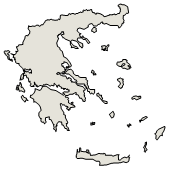
The settlement is located in the northernmost part of the prefecture near the Greek-Albanian border, 42 kilometers north of Filiates[3], 65 km northeast of Igoumenitsa and about 60 km northwest of Ioannina at the foot of Mourgana opposite Tsamantas, at an altitude of about 650 m.
Its name probably comes from the chapel of the prophet Elias that dominates the area as it is visible from every point of the horizon located on a buttress of approximately 900 meters high on Mount Mourgana. It is a village, once a large village in its area. Due to the barren terrain, the mass migration of the male population of Lia was a common phenomenon in order to secure a living for themselves and their families[4].
Ecclesiastically, Lia falls under the Metropolis of Paramythia, Filiates, Giromeri and Parga and its central church is dedicated to the Holy Trinity (built in 1908[5]). The most important religious festivals of the village are dedicated to the Prophet Elias, Agia Marina and Agia Triada[6].
Historical data
Antiquity
At the site of "Kastri", located on an outcrop of the Mourgana, between the present-day villages of Lias and Vavouri, the ruins of an ancient walled settlement (castle) have been identified. The settlement seems to have survived (or was revived) into the imperial period, when it was administratively subordinate to the Roman colony of Photiki. Its position was extremely strategic, as it controlled a road leading from Buthros to Molossia via Thesprotia[7].
Turkish rule
The modern settlement seems to have been founded in the early 18th century[8], mainly by farmers and stockbreeders coming from the Mahalas of Delvinos and the Skamneli of Zagori[9][10]. According to local sources, Kosmas the Aetolian visited the village twice as part of his tours: first in 1773 and then in 1779[11]. During the Revolution of 1821, the participation of a resident of Lia in the body of Konstantinos Lagoumitzis is recorded[12].
In the 1860s, the confrontation between the residents of Lia and other villages of Mourgana began with the Muslim aghas of the Seiko and Demi families, who wished to transform the villages of the region from self-governing communities into their estates. As a result of the pressures, several families of Lia were forced to relocate to neighboring villages, as well as to Thessaly[13].
In 1874, according to the report of the Bishop of Paramythia, Anthimos, 180 families lived in Lia, while the settlement had a Greek co-educational school attended by 45 students. The school's needs were covered by the community's contributions, the income of the local church and the sponsorship of the diocese[14] and a few years later, according to the writer Ioannis Lambridis, the school was financially supported by the monastery of Agios Georgios in Tsamantas[15]. In 1876, several residents of Lia faced persecution due to pressure from powerful Muslim aghas from Filiates: specifically, one died in the prisons of Ioannina and four were exiled by the authorities, while the rest were released with the mediation of the Ecumenical Patriarchate[16][17]. During the last years of the Ottoman Empire, the village was half a manor house, had a population of approximately 1500 inhabitants and had a Greek urban school and a four-year girls' school, which were attended by a total of 180 students[18].
The village, like the rest of Thesprotia, came to Greece through the Balkan Wars. During the run-up to and during the Balkan Wars, residents of Lia participated in the guerrilla force of their fellow countryman, Ioannis Papakostas or Tzon Kosta[19].
Modern era
During the Asia Minor Campaign, eight Liots were killed on the battlefields[20]. A few years later, the village had a primary school, a telephone office and a police station. In addition, it had 814 residents, who were mainly engaged in small-scale livestock farming and agriculture[21]. During the Greco-Italian War, two soldiers from Lia were killed, while an equal number were disabled in war[22].
During the Occupation, due to its inaccessible location, the village emerged as a center of the EAM/ELAS guerrillas and many of its residents actively participated in the National Resistance through the ranks mainly of this organization[4][23] and secondarily of EDES[23]. In April 1944, as part of a wider joint operation with Cham vassals, German troops burned down Lia and killed four residents they captured on the spot.[24] According to a later report, the liberation found 58 of the 115 houses in the village destroyed.[25]
During the Civil War that followed, Lia, along with the rest of the Murgana region, was a stronghold of the DSE forces. During this period, the village is mainly known for the execution of five or seventeen people by a DSE guerrilla court. These people were executed for their involvement in the escape of civilians to government forces. The escapees included several minors, who in this way avoided the so-called "child round-up" or "child rescue", while the whole story became known worldwide through the book "Eleni" and the film of the same name by Nikos Gatzogiannis, one of the children who escaped and the son of one of the executed (specifically Eleni Gatzogiannis, to whom the book also refers)[4][26][27]. In view of the defeat and expulsion of the DSE from the area of Mourgana in September 1948, the residents of Lia were forced to follow the retreat of the guerrillas, ending up in the states of Eastern Europe[4][28]. In total, 25 residents of the village were killed during the Civil War, both armed men from both sides and civilians[29].
After the war, the majority of the expatriates returned to Greece in 1954[30] and in the 1961 census, Lia had 304 residents[31]. However, in the following decades, the population continued to decline. In the 1960s, the village was connected to the electricity and water supply networks, and later various infrastructure and renovation projects followed[32].
Administratively, after its integration into the Greek state, Lia was subordinated to the province of Filiates. From 1997 to 2010, according to the then administrative division of the country, it was the seat of a community of the municipality of Filiates. Since 1 January 2011, it has been the seat of the homonymous local community, the municipal unit of Filiates, the homonymous Kallikratiko municipality.
Sights and culture
The village's sights include the church of Agios Dimitrios, which dates back to the 18th century[5][33], the church of Agia Paraskevi, which in the past housed three works by the folk painter Theophilos[34][35], the bridge of Goura and the homonymous stone fountain[36]. Other points of interest are the restored house of the Gatzogiannis family[37] and the Ifantis Museum, which houses works by Theophilos and S. Sorogas[38][39].
Population censuses
Census 1895 1928 1940 1951 1961 1971 1981 1991 2001 2011
Population 874[40] 814[21] 787[41] 65[42] 304[31] 143[43] 165[44] 141[45] 81[45] 62[2]
Persons
Eleni Gatzogianni († 1948), victim of the Civil War.
Nikos Gatzogiannis[46] (1939), writer.
Ioannis Papakostas[47] (1868–1932), chieftain and local benefactor.
Kostas Tsantinis[48][49] (1936), writer.
References
Spyros L. Charamopoulos, Historical travelogue of the village of Lia in Thesprotia, Dodoni Publications, Athens 2007, p. 11.
Athens, 21 April 2023 HELLENIC STATISTICAL AUTHORITY No. Prot.: 2846 / B4 – 461 Pg. 49, line 2317
«Lia». filiates.gr. Municipality of Filiates. Archived from the original on 18 November 2016. Retrieved 10 February 2017.
Konstantina Bada, The death of Helen in the Civil War. Memory and the event, memory as history, in: Chrysoula Hatzitaki - Kapsomenou (ed.), Greek Traditional Culture. Folklore and History, Conference in memory of Alki Kyriakidou - Nestor (6-8 November 1999), Thessaloniki 2001, Paratiritis, pp. 230 - 240.
Charamopoulos, 2007, p. 89.
"Festivals". mourgana.gr. Mourgana. Archived from the original on 14 February 2017. Retrieved 10 February 2017.
[1] D. K. Samsaris, The Roman colony of Photiki in Thesprotia of Epirus (Historical-geographical and epigraphic contribution), Giannina 1994, pp. 91-92.
Charamopoulos, 2007, pp. 19-20.
Christos D. Lazos, Greeks in the People's Liberation Movements, Aeolos, Athens 2001, p. 161.
Charamopoulos, 2007, p. 18-21.
Charamopoulos, 2007, p. 22.
Charamopoulos, 2007, p. 23-24.
Charamopoulos, 2007, p. 25-26.
Charalambos Foukis, Basic Education in Thesprotia (Late Turkish Rule, 1854 - 1913), University of Ioannina, Doctoral Thesis, Ioannina 2008, p. 194 - 195.
Ioannis Lambridis, On the Charity Works in Epirus, Typoiis Georgiou Kiousis, En Athinais 1880, vol. A', p. 56.
George K. Gikas, My Homeland Epirus. Wanderings on the Historical Paths of Epirus, Armos Publications, 2013, p. 375.
Charamopoulos, 2007, pp. 26-27.
Foukis, 2008, p. 603.
Charamopoulos, 2007, pp. 33-39.
Charamopoulos, 2007, p. 47.
Great Greek Encyclopedia, vol. XV, p. 886.
Charamopoulos, 2007, p. 47-48.
Charamopoulos, 2007, p. 48.
Charamopoulos, 2007, p. 52-55.
Report on the damages caused in general in Epirus from the declaration of the Greco-Italian war (28-10-40) until its final liberation, October 1944, Library of the Epirus Society of Athens, Athens 1987, p. 159.
Maglinis, Elias (8 January 2017). "The story of a mother, a country". kathimerini.gr. Kathimerini. Retrieved 10 February 2017.
Nikos Marantzidis, Democratic Army of Greece (DSE). 1946 - 1949, Alexandria Publications, 2010, 2nd edition, p. 181.
Charamopoulos, 2007, p. 72.
Charamopoulos, 2007, p. 68-71.
Charamopoulos, 2007, p. 83.
Result of the population - housing census of 19 March 1961 (PDF). Athens: National Statistical Service of Greece. 1964. p. 149.
Charamopoulos, 2007, p. 83, 86.
"Post-Byzantine period (1453 - 1830)". mourgana.gr. Mourgana. Archived from the original on 5 March 2011. Retrieved 10 February 2017.
Vassilis Krapsitis, Contemporary Epirote Benefactors (1913-1986), publications of the association "Friends of Souli", Athens, 1987, pp. 224-225.
Charamopoulos, 2007, pp. 92-94.
Charamopoulos, 2007, p. 92.
Magra, Iliana (25 August 2023). "The "K" in the village of Lia: 75 years since the martyrdom of "Eleni"". kathimerini.gr. Kathimerini. Retrieved December 21, 2024.
"Priceless treasures in the unique Ifanti Museum - In a small village near the Greek-Albanian border". iefimerida.gr. iefimerida. August 11, 2018. Retrieved December 21, 2024.
Pournara, Margarita (August 14, 2018). "A new museum blooms like a small flower, on the rocks of Epirus". kathimerini.gr. Kathimerini. Retrieved December 21, 2024.
Michaels Kokolakis, The Turkish statistics of Epirus in the Salname of 1895, Workbooks, issue 18, Center for Modern Greek Research, Athens 2008, p. 270.
Charitonos K. Lambrou, The Tsamides and the Tsamouria, Athens 1949, p. 9.
Kingdom of Greece, National Statistical Service of Greece, Population of Greece according to the census of 7 April 1951, In Athens, 1955, p. 80.
Hellenic Republic - National Statistical Service of Greece, Result of the population - housing census of 14 March 1971, Athens 1980, p. 119.
Hellenic Republic - National Statistical Service of Greece, Results of the population - housing census of 5 April 1981, volume I (Population by geographical and administrative divisions), Athens 1994, p. 298.
"Censuses 1991 and 2001". Archived from the original on 13 June 2006. Retrieved 13 June 2006.
World Council of Epirus Abroad
Vassilis Krapsitis, 1987, pp. 136-138.
"Kostas Tsantinis". mourgana.gr. Mourgana. Archived from the original on 26 January 2012. Retrieved 10 February 2017.
"Kostas Tsantinis". biblionet.gr. BiblioNet. Retrieved 10 February 2017.
See also
Kourelis, K. (2020). Three Elenis: Archaeologies of the Greek American Village. Journal of Modern Greek Studies 38:1 (2020), 85-108.
| Municipal unit Filiates |
|---|
|
Municipal Community Filiates
|
| Elaia (Ελαία, η) |
| Filiates (Φιλιάτες, οι) |
| Community Agios Nikolaos |
| Agios Nikolaos (Άγιος Νικόλαος, ο) |
| Community Agioi Pantes |
| Agioi Pantes (Άγιοι Πάντες, οι) |
| Palaiochori (Παλαιοχώρι, το (Τ.Κ.Αγίων Πάντων)) |
| Community Aetos |
| Aetos (Αετός, ο) |
| Community Ampelonas |
| Ampelonas (Αμπελών, ο) |
| Community Anavryto |
| Anavryto (Αναβρυτό, το) |
| Community Achladea |
| Achladia (Αχλαδέα, η) |
| Community Vavouri |
| Vavouri (Βαβούρι, το) |
| Community Vrysella |
| Vrysella (Βρυσέλλα, η) |
| Community Gardiki Filiates |
| Gardiki (Γαρδίκι, το) |
| Melissa (Μέλισσα, η) |
| Perama (Πέραμα, το) |
| Community Giromei |
| Giromeri (Γιρομέρι, το) |
| Community Gola |
| Gola (Γολά, η) |
| Rodostiva (Ροδοστίβα, η) |
| Community Kallithea Filiates |
| Kallithea (Καλλιθέα, η) |
| Community Κάτω Xechoro |
| Vrysoula (Βρυσούλα, η) |
| Kato Xechoro (Κάτω Ξέχωρο, το) |
| Potamia (Ποταμιά, η) |
| Sitaina (Σίταινα, η) |
| Sokolakatika (Σοκολακάτικα, τα) |
| Community Keramitsa |
| Keramitsa (Κεραμίτσα, η) |
| Community Kerasochori |
| Kerasochori (Κερασοχώρι, το) |
| Mavroneri (Μαυρονέρι, το) |
| Community Kefalochori |
| Kefalochori (Κεφαλοχώρι, το) |
| Kossyvatika (Κοσσυβάτικα, τα) |
| Community Kokkinia |
| Kokkinia (Κοκκινιά, η) |
| Tsatsoulaiika (Τσατσουλαίικα, τα) |
| Community Kokkinolithari |
| Kokkinolithari (Κοκκινολιθάρι, το) |
| Nerochori (Νεροχώρι, το) |
| Community Kouremadi |
| Kouremadi (Κουρεμάδι, το) |
| Community Kryoneri |
| Kryoneri (Κρυονέρι, το) |
| Community Kyparisso |
| Agios Arsenios (Άγιος Αρσένιος, ο) |
| Kyparisso (Κυπάρισσο, το) |
| Community Leptokarya |
| Agia Marina (Αγία Μαρίνα, η) |
| Leptokarya (Λεπτοκαρυά, η) |
| Community Lia |
| Lia (Λία, η) |
| Community Lista |
| Lista (Λίστα, η) |
| Community Malouni |
| Achouria Malouniou (Αχούρια Μαλουνίου, τα) |
| Velentzina Malouniou (Βελεντζινά Μαλουνίου, τα) |
| Malouni (Μαλούνι, το) |
| Community Milea |
| Milea (Μηλέα, η) |
| Community Xechoro |
| Dafni (Δάφνη, η) |
| Xechoro (Ξέχωρο, το) |
| Community Palaiokklisi |
| Ano Palaiokklisi (Άνω Παλαιοκκλήσι, το) |
| Kato Palaiokklisi (Κάτω Παλαιοκκλήσι, το) |
| Community Palaiochori |
| Donatos (Δονάτος, ο) |
| Palaiochori (Παλαιοχώρι, το (Τ.Κ.Παλαιοχωρίου)) |
| Community Palampas |
| Palampas (Παλαμπάς, ο) |
| Community Pigadoulia |
| Pigadoulia (Πηγαδούλια, τα) |
| Community Plaisio |
| Kotsika (Κώτσικα, η) |
| Plaisio (Πλαίσι, το) |
| Community Platanos |
| Platanos (Πλάτανος, ο) |
| Community Raveni |
| Raveni (Ραβενή, η) |
| Community Rizo |
| Rizo (Ριζό, το) |
| Chlomos (Χλομός, ο) |
| Community Sideri |
| Sideri (Σίδερη, η) |
| Community Trikoryfo |
| Trikoryfo (Τρικόρυφο, το) |
| Fragma Kalama (Φράγμα Καλαμά, το) |
| Community Tsamantas |
| Kamitsani (Καμίτσανη, η) |
| Tsamantas (Τσαμαντάς, ο) |
| Community Faneromeni |
| Faneromeni (Φανερωμένη, η) |
| Community Foiniki |
| Foiniki (Φοινίκι, το) |
| Community Charavgi |
| Agia Varvara (Αγία Βαρβάρα, η) |
| Charavgi (Χαραυγή, η) |
Retrieved from "http://en.wikipedia.org/"
All text is available under the terms of the GNU Free Documentation License
| Ancient Greece
Science, Technology , Medicine , Warfare, , Biographies , Life , Cities/Places/Maps , Arts , Literature , Philosophy ,Olympics, Mythology , History , Images Medieval Greece / Byzantine Empire Science, Technology, Arts, , Warfare , Literature, Biographies, Icons, History Modern Greece Cities, Islands, Regions, Fauna/Flora ,Biographies , History , Warfare, Science/Technology, Literature, Music , Arts , Film/Actors , Sport , Fashion --- |

