

Hans Burgkmair the Elder
Paintings
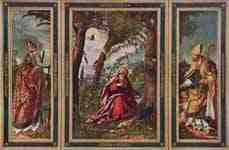
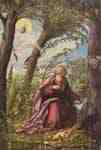
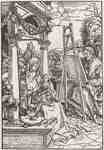
St John altar, middle panel : John on Patmos
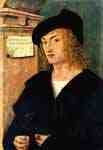
Portrait of Hans Schellenberger
Drawings
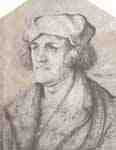
Illustrations Part 1
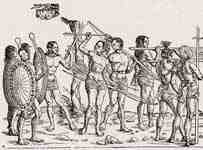
"The king of Cochin ," left half
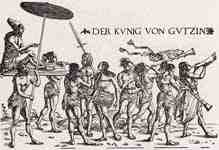
"The king of Cochin " , right half
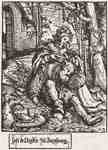
"Series the follies of love ," Part 1 : Samson and Delilah
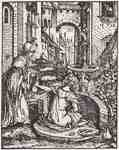
"Series the follies of love ," Sheet 2: Bathsheba in her bath
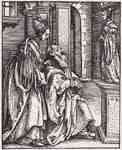
"Series the follies of love ," Sheet 3: Solomon's idolatry
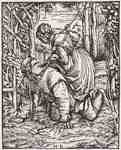
"Series the follies of love ," Sheet 4: Aristotle and Phyllis
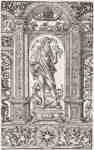
"Series the planet pictures " Sheet 1: Saturn
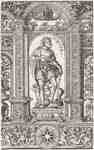
"Series the planet pictures " Sheet 2: Jupiter
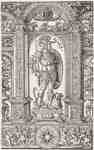
"Series the planet pictures " Sheet 3: Mars
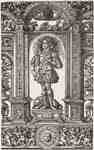
"Series the planet pictures " Sheet 4: sun
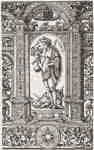
"Series the planet pictures " Sheet 5 : Venus
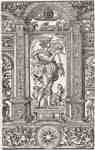
"Series the planet pictures " Sheet 6 : Mercury
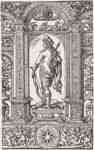
"Series the planet pictures " Sheet 7 : Moon
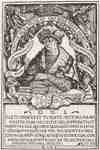
" Death portrait of the winning poet Conrad Celtis ," first state
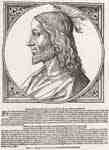
Face of Jesus in an ornament frame
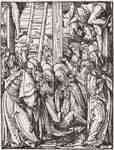
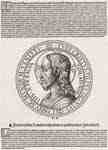
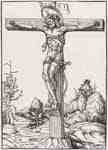
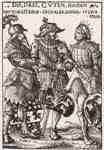
Three pagan heroes : Hector, Alexander and Caesar
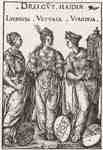
Three pagan heroines : Lucretia, Veturia and Virginia
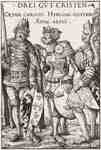
Three heroes of Christendom : Charlemagne, King Arthur , Godfrey of Bouillon
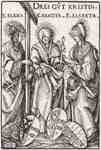
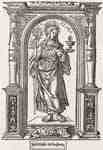
Three heroines of Christianity : St. Helena , Bridget of Sweden and Elizabeth of Thuringia
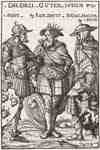
Three Jewish Heroes: Joshua , David and Judas Maccabeus
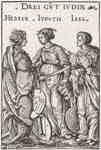
Three Jewish Heroines : Esther , Judith and Jael
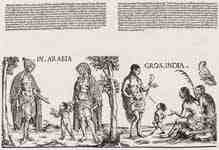
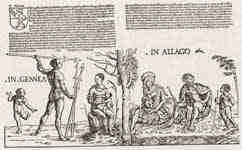
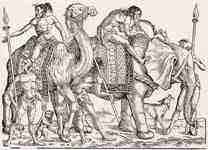
Natives with camel and elephant
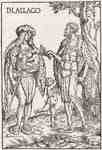
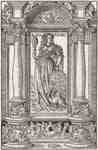
Sequence of the " vices " , page 1 : pride
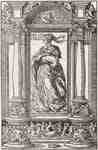
Sequence of the " vices " , page 2 : avarice
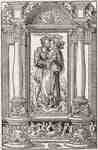
Sequence of the " vices " , page 3 : unchastity
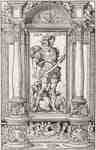
Sequence of the " vices ," Sheet 4: anger
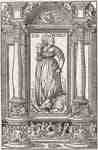
Sequence of the " vices " , sheet 5 : Gluttony
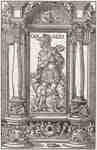
Sequence of the " vices " , sheet 6 : Envy
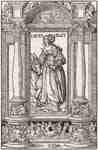
Sequence of the " vices " , sheet 7 : Inertia
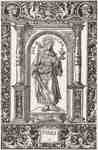
Sequence of the "virtues" , page 1 : Faith
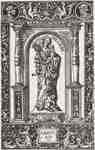
Sequence of the "virtues" , page 2 : Love
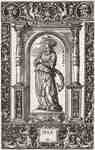
Sequence of the "virtues" , Part 3 : Hope
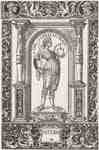
Sequence of the "virtues" , Part 4 : Justice
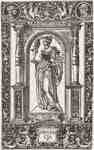
Sequence of the "virtues" , sheet 5 : Caution
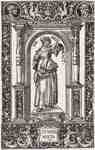
Sequence of the "virtues" , sheet 6 : Temperance
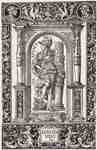
Sequence of the "virtues" , sheet 7 : Strength
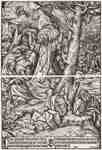
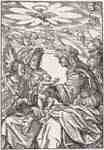
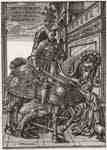
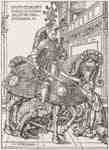
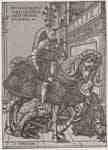
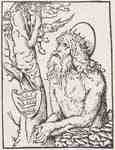
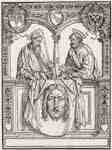
St. Peter and St. Paul with the Sudarium
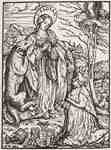
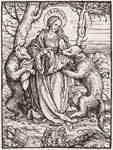
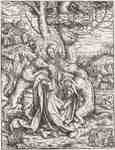
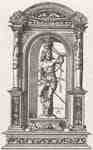
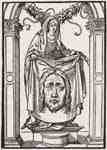
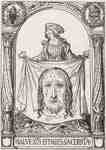
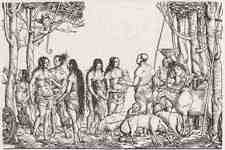
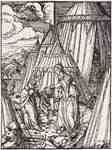
Judith in the camp of Holofernes
Hans Burgkmair the Elder, Illustrations Part 2
Hans Burgkmair the Elder (1473–1531) was a German painter and woodcut printmaker.
Life
Burgkmair was born in Augsburg, the son of painter Thomas Burgkmair and his son, Hans the Younger, became one too.[1] From 1488, he was a pupil of Martin Schongauer in Colmar, who died during his two years there, before Burgkmair completed the normal period of training. He may have visited Italy at this time, and certainly did so in 1507, which greatly influenced his style. From 1491, he was working in Augsburg, where he became a master and opened his own workshop in 1498.
Hollstein ascribes 834 woodcuts to him, mostly for book illustrations, with slightly over a hundred being "single-leaf", that is prints not for books. The best of them show a talent for striking compositions, and a blend, not always fully successful, of Italian Renaissance forms and underlying German style.
From about 1508, he spent much of his time working on the woodcut projects of Maximilian I until the Emperor's death in 1519.[1] He was responsible for nearly half of the 135 prints in the Trumphs of Maximilian, which are large and full of character. He also did most of the illustrations for Weiss Kunig and much of Theurdank. He worked closely with the leading blockcutter Jost de Negker, who became in effect his publisher.[2]
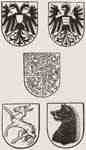
Burgkmair's 1522 colored woodcut of the Coat of arms of the Swabian League, with a flag of St. George. Two putti support a red cross in a white field;
Notes
Gietmann 1908.
Landau & Parshall, 212
"Emperor Maximilian on Horseback". Artbma.org.
"Lovers Surprised by Death".[not in citation given]
The Renaissance Print, David Landau & Peter Parshall, Yale, 1996, ISBN 0-300-06883-2
"Hans (the Younger) Burgkmair". Artnet.de.
Chisholm 1911.
References
This article incorporates text from a publication now in the public domain: Chisholm, Hugh, ed. (1911). "Burgkmair, Hans". Encyclopædia Britannica 4 (11th ed.). Cambridge University Press.
This article incorporates text from a publication now in the public domain: Gietmann, Gerhard (1908). "Hans Burckmair". In Herbermann, Charles. Catholic Encyclopedia 3. Robert Appleton Company.the motto: What God has joined let man not separate.
He was an important innovator of the chiaroscuro woodcut, and seems to have been the first to use a tone block, in a print of 1508.[3] His Lovers Surprised by Death (1510) is the first chiaroscuro print to use three blocks,[4] and also the first print that was designed to be printed only in colour, as the line block by itself would not make a satisfactory image. Other chiaroscuro prints from around this date by Baldung and Cranach had line blocks that could be and were printed by themselves.[5] He produced one etching, Venus and Mercury (c1520),[6] etched on a steel plate, but never tried engraving, despite his training with Schongauer.
Burgkmair was also a successful painter, mainly of religious scenes and portraits of Augsburg citizens and members of the Emperor's court. Many examples of his work are in the galleries of Munich, Vienna and elsewhere, carefully and solidly finished.[7] His portraits suit modern taste better than his religious works.
Burgkmair died at Augsburg in 1531.
----
Fine Art Prints | Greeting Cards | Phone Cases | Lifestyle | Face Masks | Men's , Women' Apparel | Home Decor | jigsaw puzzles | Notebooks | Tapestries | ...
----
Artist
A - B - C - D - E - F - G - H - I - J - K - L - M -
N - O - P - Q - R - S - T - U - V - W - X - Y - Z
Retrieved from "http://en.wikipedia.org/"
All text is available under the terms of the GNU Free Documentation License
